Overview
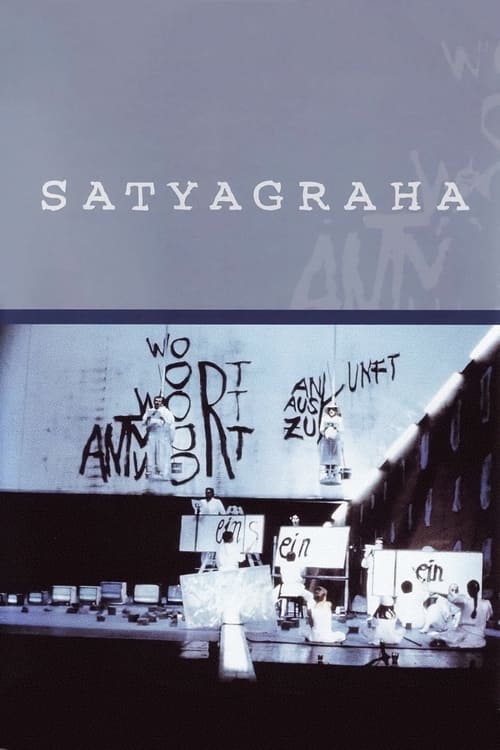
This luminous, visionary opera tells the story of how Mahatma Gandhi developed the philosophy of satyagraha, nonviolent active resistance, as a political revolutionary tool to fight oppression, connecting his lifework to three historical figures who advanced his philosophy: the celebrated Russian writer Leo Tolstoy, the great Indian poet and philosopher Rabindranath Tagore and the heroic American civil rights leader Martin Luther King. The libretto is comprised of passages from “The Bhagavad-Gita,” India’s greatest philosophical epic, and perfectly complements Glass’ ravishing score, mysteriously transporting the audience with a serene power and an all-encompassing sense of peace.
Frequently Asked Questions & Story Details
Who directed Philip Glass: Satyagraha?
Philip Glass: Satyagraha was directed by Hugo Käch.
Where was Philip Glass: Satyagraha produced?
It was produced by companies including RM Arts, ZDF in Germany.
Philip Glass: Satyagraha Ending Explained & Trivia
The ending of Philip Glass: Satyagraha wraps up key thematic points regarding its characters. The film showcases excellent use of sound design, writing, and visual effects to create an immersive cinematic environment. For full analysis of ending theories, you can check out our corresponding articles in the Lumaflicks Blog section.